Qing Chang
  • Home
  • Research
  • Projects
  • Teaching
  • CV
  • Contact

Upward Mobility of Frontline Fossil Fuel Workers

A visual story about career pathways in the green sector

Labor Market
Green Transition
Workforce Development
Authors

Qing Chang

Michael Aklin

Morgan R. Frank

Shanti Gamper-Rabindran

Published

March 17, 2026

Research Story

What happens after frontline fossil fuel workers leave their first fossil fuel job?

The usual transition story emphasizes short-run moves into similar green jobs. This project asks a longer career question: whether the green sector can also create upward mobility into managerial, science, and engineering occupations.

2000-2023career histories
40.2%held at least one green-sector job
2xhigher probability of upward mobility

Question Mobility Wages Skills Policy

+

The project tracks workers after their first frontline fossil fuel job and follows whether later transitions open higher-mobility destinations.

+

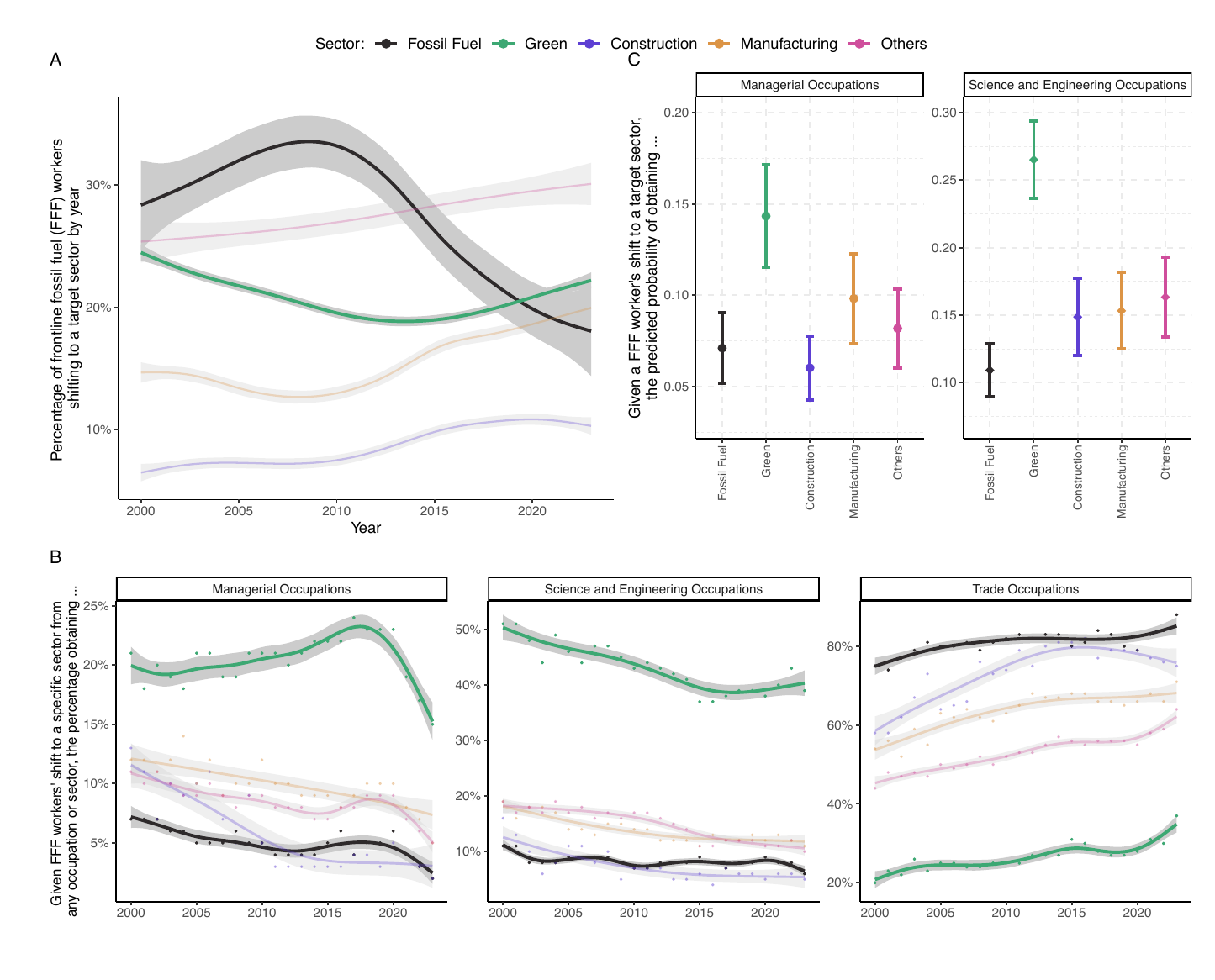
Green-sector transitions are associated with higher probabilities of entering managerial and science and engineering occupations.

+

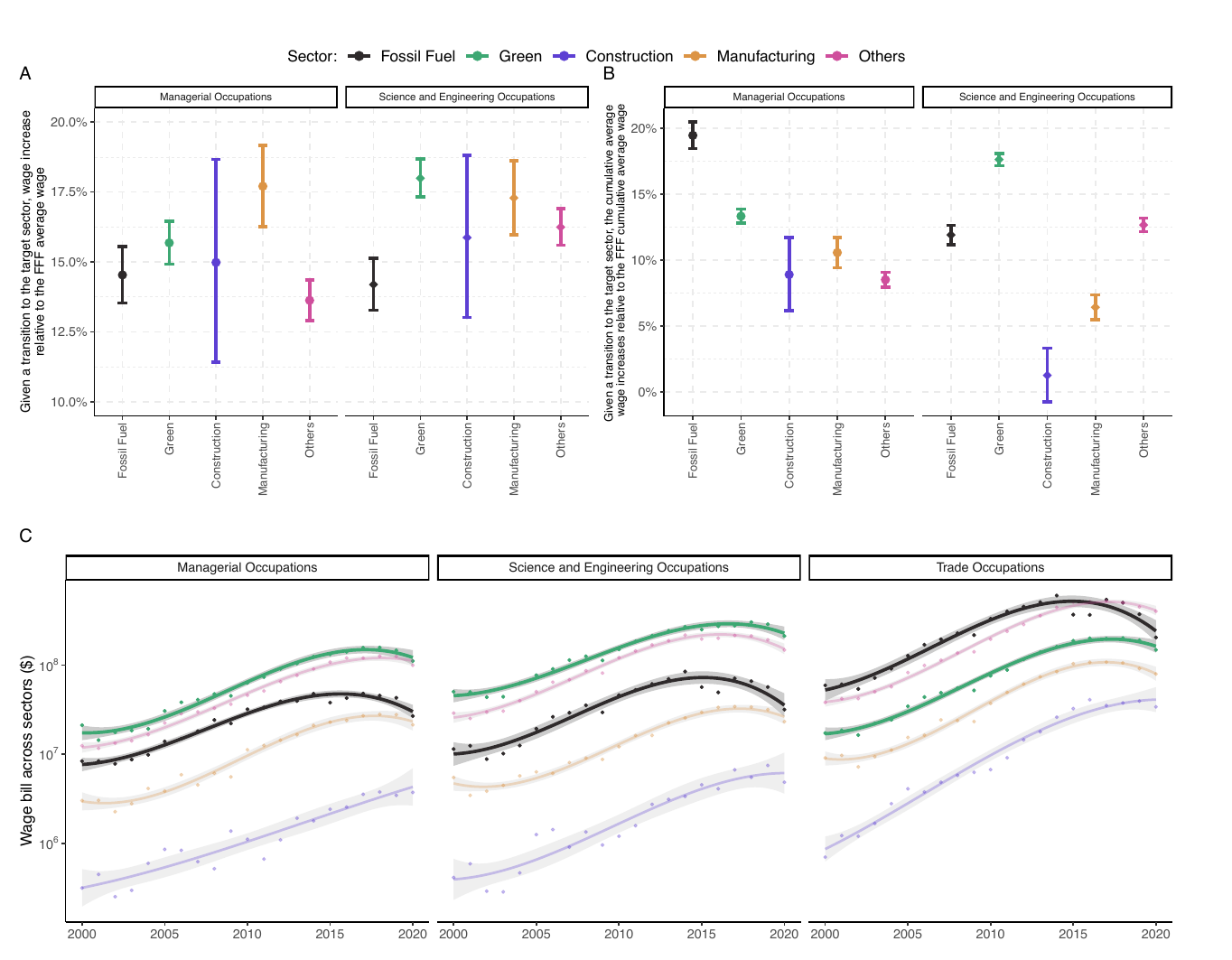
Upwardly mobile workers experience larger wage gains when moving into green-sector roles than when remaining in fossil fuel employment.

+

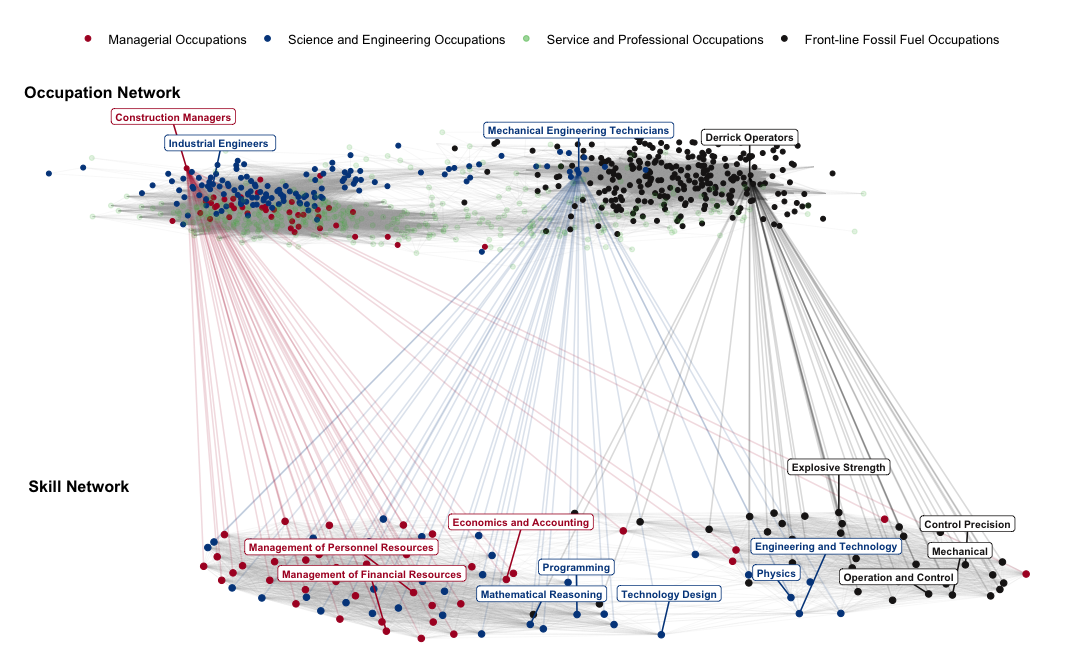
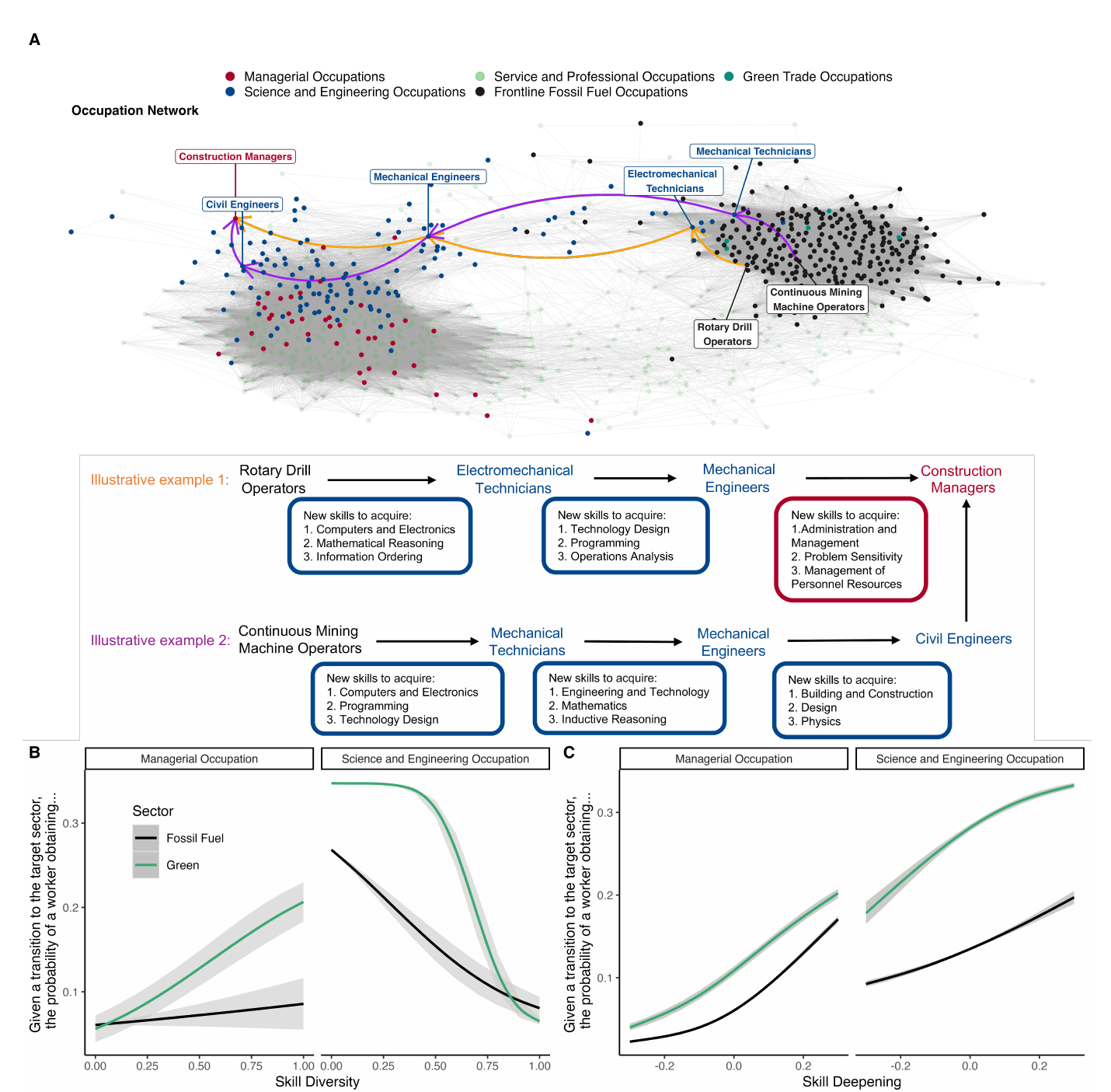
Occupation networks reveal possible sequences from frontline fossil fuel work into technical and managerial destinations.

Track workers across careers, not only single job changes.
Compare green, fossil fuel, manufacturing, construction, and other destinations.
Connect occupational mobility to wage trajectories.
Identify skill pathways that can support upward movement.
01
The question

A just transition is not only about the next job

Frontline fossil fuel workers face disruption as fossil fuel employment declines. The key question is whether green-sector transitions can support career advancement over time, not only horizontal moves into familiar trade occupations.

02
Mobility advantage

Green-sector transitions open more upward pathways

Workers who move into the green sector are more likely to reach managerial, science, and engineering roles than comparable workers who remain in fossil fuel employment. The point is not that every green job is high-wage immediately; it is that the sector offers more pathways into upwardly mobile roles.

03
Wage payoff

Career gains become visible over the full trajectory

The wage story changes when careers are studied over time. Green-sector transitions are associated with higher cumulative wages, partly because more workers reach higher-mobility occupations and because science and engineering roles in the green sector carry especially strong wage gains.

04
Skill pathways

Mobility depends on the pathway, not only the destination

The paper maps how workers can move from frontline fossil fuel occupations toward engineering and managerial roles through stepping-stone occupations. Skill diversity is linked to managerial mobility, while deeper science and engineering skills are linked to technical mobility.

05
Policy implication

Workforce policy should support career ladders

Training policy often focuses on the first move out of fossil fuel employment. This project suggests a broader target: reskilling systems that help workers build pathways into higher-mobility green-sector occupations over the course of a career.

© 2026 Qing Chang ∙ Made with Quarto.

License